
Ambati Rayudu reveals straight about the Suryakumar Yadav catch in the T20 World Cup 2024 final
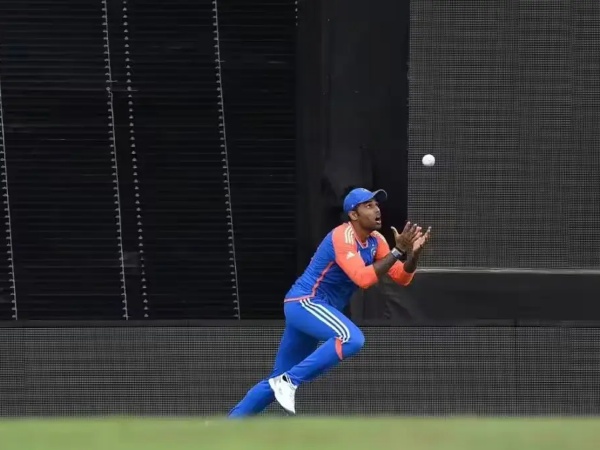
Nearly 14 months after India’s historic T20 World Cup triumph, former cricketer Ambati Rayudu has reignited the controversy surrounding Suryakumar Yadav’s decisive catch in the final against South Africa in Barbados. The catch, which ended David Miller’s stay at the crease, also ended India’s long 11-year wait for an ICC trophy, making it an unforgettable moment in Indian cricket history. Stationed at long-off, Suryakumar pulled off a stunning effort by juggling the ball just inches from the boundary rope before completing the catch. The dismissal came at a crucial moment, with South Africa needing runs in the final over, and instantly turned the tide in India’s favour.
Ambati Rayudu reveals the truth about Suryakumar Yadav catch in the T20 World Cup 2024 final
While most hailed it as one of the most iconic catches ever under pressure, questions about its legality have lingered ever since. Many fans pointed out that his foot may have touched the boundary cushion, sparking debates on social media. Numerous angles of video clips and photos were shared, with both sides of the argument fiercely defending their take. Despite the third umpire giving it out after reviewing the footage, Rayudu’s recent comments have brought the moment back into the spotlight, stirring renewed discussion over whether the dismissal was completely fair.
The controversy surrounding Suryakumar Yadav’s match-winning catch in the T20 World Cup 2024 final had largely faded from public discourse—until Ambati Rayudu reignited it during a recent appearance on the Unfiltered Podcast with Shubhankar Mishra. Rayudu, who was part of the commentary team during the final in Barbados, shed new light on the situation. He claimed that the boundary rope had been temporarily moved back during the match to make room for certain broadcast equipment. However, after the equipment was removed, the rope was allegedly not restored to its original position near the boundary cushion.
According to Rayudu, this subtle shift may have gone unnoticed at the time but could have played a significant role in validating Suryakumar’s remarkable catch at long-off, which dismissed David Miller and sealed India’s win, making it a huge cricket update. While the third umpire had declared the catch legal based on ICC regulations—which define the boundary by the cushion’s location—Rayudu’s comments have reopened discussions about the fairness and accuracy of such calls. His revelation has stirred reactions among fans and experts alike, raising fresh questions about ground protocols and whether such logistical oversights could influence the outcome of a major final on cricket’s biggest stage.
"There were world feed commentators. During the break, they usually put a chair and a screen there for broadcasters. That’s why the rope was pushed back a little. But after the screen and chair were removed, it was left that way. The boundary ended up being a bit bigger for us. We could see it clearly from above. It was god’s plan," stated former Indian cricketer Ambati Rayudu.
Following India’s T20 World Cup triumph, controversy erupted over Suryakumar Yadav’s match-winning catch, particularly among South African fans and former cricketers. Many claimed that the boundary rope was not in its original position during the final moments of the game. They shared images on social media suggesting that the cushion marking the boundary had been pushed a few feet inside, potentially making Suryakumar’s incredible catch appear legal when it may not have been if the rope had been in place.
However, according to the official ICC playing conditions, the boundary is defined by the position of the solid object — the cushion — and not the white painted line on the ground. Clause 19.3 of the ICC rulebook clearly states: “If a solid object used to mark the boundary is disturbed for any reason, then the boundary shall be considered to be in its original position.” Furthermore, Section 19.3.2 explains that if the boundary marker is disturbed, it must be returned to its original position as soon as it is practicable, ideally when the ball is dead.
“I don’t know if it was a six (in natural circumstances) or not. If the rope had been placed at its normal position, maybe Surya would’ve run from inside," stated Suryakumar Yadav.