
All About Trampoline Ahead Of The Olympic Games 2024
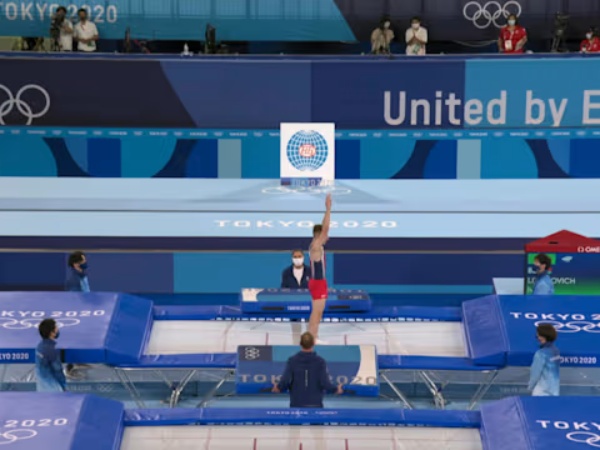
Trampolining originated in 1934 through the ingenuity of American gymnast George Nissen. Inspired by observing trapeze artists rebounding off safety nets, Nissen crafted the first trampoline prototype to replicate their aerial maneuvers. Initially employed for astronaut and acrobatic athlete training, the trampoline swiftly gained acclaim as a standalone sport. In 1964, London hosted the inaugural Trampoline World Championships, marking a pivotal moment in the sport's evolution. Its recognition by the International Gymnastics Federation in 1998, 34 years after its inception, solidified trampolining's status within global athletic circles. George Nissen's invention not only revolutionized training methods but also sparked a worldwide craze for a sport that combines athleticism with airborne artistry. Today, trampolining stands as a testament to human creativity and the enduring pursuit of physical excellence through innovative sporting equipment.
In the individual trampoline events, both men and women soar to heights exceeding 8 meters on a rectangular canvas made from synthetic fabric. This specialized trampoline bed, crucial to their performance, is meticulously attached to a frame using steel springs designed to catapult athletes skyward with each bounce. The sport's competitive format involves athletes executing intricate routines comprising ten elements. These routines are meticulously scored based on the difficulty of their maneuvers, the precision of their execution, and the duration spent airborne.
Trampolining demands unparalleled technical proficiency and absolute precision from its participants. Athletes must master a repertoire of twists, bounces, and somersaults while maintaining control and grace under the forces generated by the trampoline's recoil action. Each routine is a blend of athleticism and artistry, where competitors strive to showcase their skills with flawless technique and seamless transitions between maneuvers. The scoring system, designed to reward both the daring and the disciplined, underscores the sport's rigorous standards and the athleticism required to excel at the highest levels of competition.
Trampoline debuted at the 2000 Sydney Games, featuring men's and women's competitions, a format that has remained consistent since. Since its Olympic inception, athletes from the People’s Republic of China have dominated, securing a total of 14 medals out of 36 awarded, including four golds. Notably, Canadian Rosie MacLennan stands out as the sole athlete to defend an Olympic trampoline title. Her achievement came at Rio 2016, following her initial gold medal triumph at London 2012. MacLennan’s success highlights the sport's competitive intensity and the challenge of sustaining peak performance across Olympic cycles, cementing her legacy as a pioneer in trampolining's Olympic history.