
Respect each athlete on World Mental Health Day
Today is World Mental Health Day, an important one in the calendar for everyone, the world over. For decades, there has been neglect on mental health, though, for its part, the World Health Organisation (WHO) is now to create more awareness. Each year, the WHO also comes up with a catch phrase. This time, they wish to “raise awareness of mental health issues around the world and to mobilise efforts in support of mental health.” Indeed, this is also a day for all stakeholders working on mental health to talk about their work and what more needs to be done.
Specifically dealing with sports, be it at the grassroot level or the highest level of those who compete in the Summer Olympics or the World Championships, mental health of athletes is a very important aspect. This writer has been associated with athletes, coaches, officials and the entire gamut of the sports fraternity for 39 years. Two decades back, mental health as a subject was unheard of, forget even being ignored. At best, if an athlete had issues with being unable to win a match from an advantageous position, the common refrain was “he chokes” or “she lacks killer instinct.”
Imagine, an athlete prepares, trains hard, burns energy and calories. The aim is to peak at the right moment. And if something goes wrong, its boom, all over. It does not take one minute to slam the athlete and utter how he or she is incapable of peaking or wastes an opportunity. This writer can recall how distraught two superstar Indian athletes were, when they came so close to winning a medal at the 2016 Rio Olympics. Yes, Sania Mirza and Rohan Bopanna serving double faults and blowing chances to win a bronze medal evoked crazy responses. From the refrain “inability to sustain pressure and hold serve” to more many nasty things were said. It is understandable if an ignorant person makes churlish remarks. But when someone considerate as literate, from the media, also posts minus care on social media, it is in poor taste.
This writer had a dirty job to do last year at the Paris 2024 Olympics, when Maheshwari Chauhan and Anantjeet Singh Naruka, the skeet mixed doubles pair had narrowly missed a bronze medal at Chateauroux, 270km from Paris. As the only Indian journalist present that day at the shotgun ranges, it was a dilemma., how to talk to these two athletes. As I approached them with trepidation, the response from Naruka was soft, yet sharp. “Hang on, we haven’t even processed what went wrong.” For once, I hated the job I was doing, not even allowing him and Maheshwari Chauhan to digest what had transpired. I did learn, one needs to respect athletes even more.
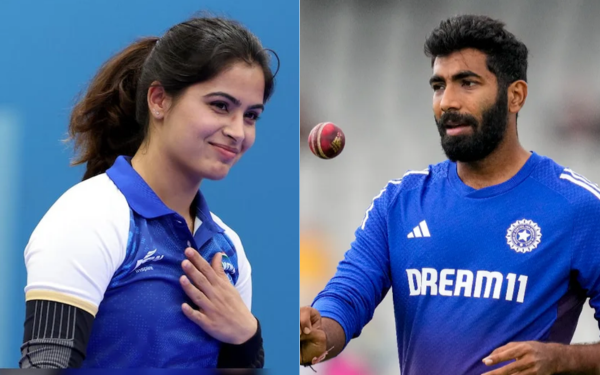
Perhaps, that same guilt pulled at the strings of my heart when I interviewed Manu Bhaker, again at the same venue during the Paris Olympics. After winning two medals, she had to reply why she ‘flopped” in sport pistol. Damnit, finishing fourth was not a flop show, she had peaked over and over again in the Olympics, even when the conditions were hard and food was in short supply. Only a heartless hack could have faulted Manu for “blowing away a medal chance.” Frankly, if this is how Manu has to face the media, imagine what happens to lesser athletes, almost on a daily basis.
Indeed, the day fans start treating star athletes, celebrities and others as mortal and not super-humans, there will be more sensitivity. How many would know, that even someone as celebrated as American swimming legend Michael Phelps, who won 28 Olympic medals, has dealt with trauma. He has admitted and even talked of suicide. It takes a lot to open up on this topic. And it also takes a lot to understand what an athlete goes through, dealing with mental health issues.
Rewind to 2021, when tennis star Naomi Osaka was avoiding the media at the French Open. She talked of huge waves of anxiety while handling media interviews. Of course, all the legend lady tennis players rallied around her, lent support. But there were also some who were insensitive, like the WTA, which wanted to throw the rule book at Osaka and failed.
The instances are many. If an athlete breaks a bone or tears a hamstring, who cares. Do we bother what trauma fast bowler Jasprit Bumrah has faced when his back packed up during the BGT Series in Australia? No, we don’t care and that includes a former cricketer named Sunil Gavaskar. Bumrah is a national asset, and so are Virat Kohli and Rohit Sharma. Allow them their space, don’t target them. Critics and social media warriors need to show more restrain. On World Mental Health Day, take a pledge, you and I will respect humans and athletes. If you cannot show concern, at least keep quiet. It will help humanity.