India takes first steps for capacity building of sports officials
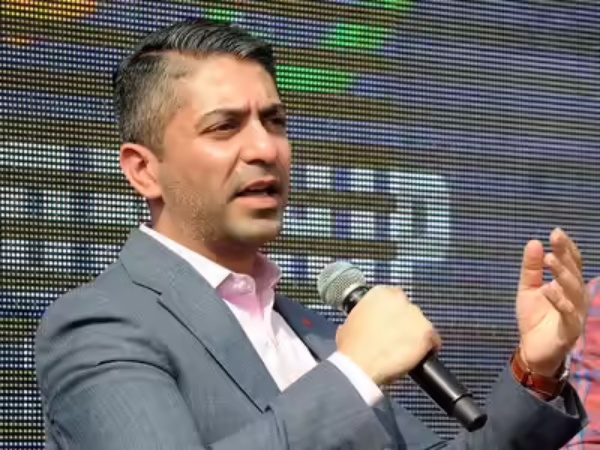
The Ministry of Youth Affairs and Sports announcement of the formation of a Task Force, with Olympic gold medalist and thought leader Abhinav Bindra as chairman, to design a framework for capacity building of sports administrators is a long-pending step aimed at ushering in greater professionalism in the governance of sport.
Of course, it is natural that expectations of good governance in sport – as in every other walk of life – are pegged high. But India has not been able to define good governance with any measure of certainty, especially in the context of Indian culture. Well-intentioned bureaucrats have copied-pasted philosophies over the past couple of decades without considering ground realities.
Curiously, a friend recently suggested that while only lawyers have a say in Bar Council and doctors in Medical Council, sportspersons must have the right to govern sports bodies themselves. He perhaps overlooked that both the Bar Council and Medical Council are statutory bodies while sports organisations are mostly societies or Section 8 Companies.
Why are so many clamouring for more ex-athletes to be included in general assemblies and governing bodies of National Sports Federations? Why are so many former athletes, without any known experience of leading organisations, being para-dropped to top positions? Does having donned India colours become the sole qualification to be an administrator?
In 2022, the International Olympic Committee (IOC) released the Basic Principles of Good Governance within the Olympic Movement – an extract from the IOC Code of Ethics – which lays down that governing bodies of sports organisations should set out clear, open, appropriate and objective eligibility criteria to include, simultaneously, the required skills and expertise, and a fair, inclusive and diverse representation of the main components in its governing bodies, including in particular:
- A balanced representation of genders among the members (with a minimum of 30% of each gender)
- Athletes’ representation with active participation in the decision-making processes
- A special focus on diversity and inclusion.
The IOC Code of Ethics insists on representation and active participation of athletes in the decision-making process but is silent on the concept of Sportspersons of Outstanding Merit which some in India have made the backbone of the Olympic movement. Of course, Indian athletes must have a voice within sports bodies, but care must be exercised in finding the right candidates.
Someone saw that 15 active athletes were elected as IOC Members. But they ignored that representatives of only 15 International Federations and 15 National Olympic Committees are IOC Members along with 70 individuals. So to take that model and demand 25 per cent representation of athletes in the general assembly of a National Sports Federation is a flawed idea.
While there can be many principles that drive organisations, it is inescapable that an organisation is its people, and it needs competent people to run it. Who defines these competencies in the context of Indian sports organisations that are mostly built in pyramidical structure, with the National Federation at the peak and the district sports association, formed by clubs, at the base?
As an illustration, we can look at the London-based Institute of Chartered Secretaries and Administrators’ (ICSA) Competency Framework for Governance Professionals. ICSA identified and divided 12 competencies into three areas – Understanding, Practice and Values – that can be replicated in sports governance.
It listed knowledge of Governance, Strategy & culture, Regulation & compliance and Finance & risk as Understanding; the skills of Influencing & enabling, Anticipating & solving problems, Advising & recording, and Planning & organising as Practice; and, Doing the right thing, Maintaining independence, being open-minded, being purposeful as Values.
To cite another example, Sport Norther Ireland Competency Framework has four pillars – Excellence (Being strategic, Leading by Example, Managing a quality service), Collaboration (Collaborative Partnerships, Enhancing team performance), Integrity (Making effectice decisions, Delivering value for money) and Learning (Flexibility and innovation, building capability for all).
Beyond these, it would appear that Indians need an extra competency – of being able to secure access to the corridors of power at the Central, State and District levels. More importantly, they need to be able to get files processed in time. Anyone who has ever run sports organisations at the lower levels will tell you that ease of doing business is not exactly a bed of roses.
With inadequate corporate support for Olympic sport at all levels, district and State Associations have struggled to complete their competition calendars. Thus, the dependance on State Government and district administration to fund the training and travel of teams is rather high. This is the reason politicians and bureaucrats have replaced royalty at the helm of sports bodies.
The expectation that competency of sports administrators would be the same across all levels – Entry, Emerging, Established and Excelling – is real. However, that would be undermine the efficiency and enthusiasm of a lot of sports officials in the lower levels where raising resources and man management would be key competencies.
There could be some in India who are looking at social and interpersonal competence, action and operational competence, general management competence and digital and technology competence as the four areas in which to assess sports administrators. Perhaps it is the first step towards the establishment of the Indian Sports Administration Services.
If we can encourage people to develop appropriate competencies to be placed in each position at all levels within the Indian sports governance ecosystem, we may see a change in how most Indians perceive sports administration to be. The raised eyebrows, the wry smiles and the uninhibited smirks may become things of the past.