
Who is known as the Godfather of cricket?
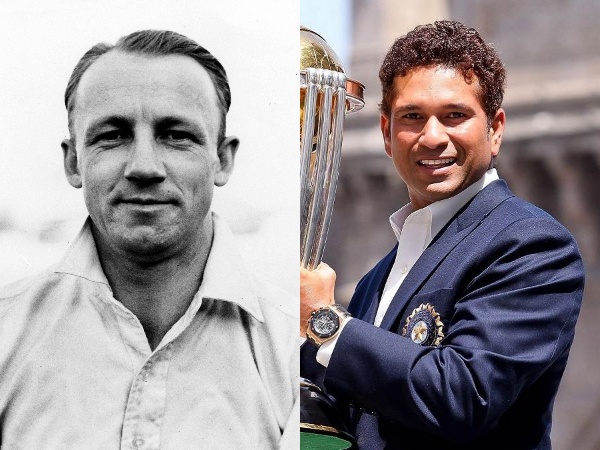
Cricket, over the decades, has seen countless legendary players grace the field. While many have left their mark with extraordinary performances, only a select few have gone on to redefine the game and carve their names permanently in its rich history. These exceptional individuals did more than just break records — they changed the very way cricket is played, viewed, and cherished across generations. Their leadership, innovation, and unmatched skills elevated the sport to new heights, inspiring millions worldwide.
These iconic figures are often regarded as the true Godfathers of Cricket — players whose impact extends far beyond statistics. W.G. Grace, one of the earliest cricket pioneers, laid the foundation for the modern game. Sir Don Bradman, with his jaw-dropping average, remains the benchmark for batting excellence. Sachin Tendulkar, revered globally, became the face of cricket in the modern era. MS Dhoni, with his calm leadership, transformed India's cricketing future. Clive Lloyd led the West Indies to dominance in the 1970s and '80s, while Sir Garfield Sobers is hailed as the finest all-rounder in cricket history. In this blog piece, let us take a look at the top 3 candidates who can be counted as the Godfather of cricket.
Who should be considered as the Godfather of cricket?
1. WG Grace
William Gilbert Grace was born on July 18, 1848, in Downend near Bristol. He dedicated most of his life to cricket, making his first-class debut at just 16 in 1865 and continuing until 1908, a remarkable career spanning 44 seasons. Grace played 870 first-class matches, scoring 54,211 runs at an average of 39.45, including 124 centuries and 251 half-centuries, making it a massive cricket update. He was also a skilled bowler, taking 2,809 wickets at an average of 18.14.
K. S. Ranjitsinhji, in his Jubilee Book of Cricket, praised Grace for revolutionizing batting, calling it a science rather than just an accomplishment. The Ranji Trophy is named after Ranjitsinhji, highlighting his significance in cricket history. In 1923, the W. G. Grace Memorial Gates were inaugurated by English cricketer Stanley Jackson, who recommended the phrase “The Great Cricketer” in Grace’s dedication. Grace was posthumously inducted into the ICC Cricket Hall of Fame on September 12, 2009, honoring his lasting impact on the sport.
2. Don Bradman
Sir Donald George Bradman, born on August 27, 1908, in Cootamundra, Australia, is widely regarded as the greatest batsman in cricket history. He ended his career with an astonishing Test batting average of 99.94—a record that remains unmatched and is considered one of the greatest achievements in any major sport. Bradman played 52 Test matches, scoring 6,996 runs with 29 centuries and 13 half-centuries. Remarkably, in 80 Test innings, he scored 50 or more runs in 42 of them, averaging a half-century every alternate innings.
His dominance was such that English bowlers introduced the controversial Bodyline tactic specifically to counter him. At just 22, during Australia’s 1930 tour of England, Bradman amassed 974 runs in five Tests, including four centuries—a record that still stands nearly a century later. Bradman’s batting mastery continues to inspire and educate cricketers worldwide, highlighting his enduring legacy in the sport.
3. Sachin Tendulkar
Sachin Tendulkar, born on April 24, 1973, in Bombay (now Mumbai), is one of the greatest cricketers in the history of the game. He made his Test debut at just 16 years old on November 15, 1989, and went on to represent India for over 24 years, playing his final Test in November 2013. Widely admired for his consistency and class, Tendulkar’s contribution to Indian cricket is unmatched in modern times.
In 2002, Wisden ranked him the second-greatest Test batter of all time, only behind Don Bradman. He became the first male cricketer to score a double century in ODIs and won the prestigious Sir Garfield Sobers Trophy for Cricketer of the Year in 2010. Throughout his illustrious career, Sachin played 664 international matches, scoring 34,357 runs at an average of 48.52. He remains the only player with 100 international centuries and also scored 164 fifties across formats.