
Who is Farokh Engineer? Second Indian cricketer to have an overseas stadium stand named after him
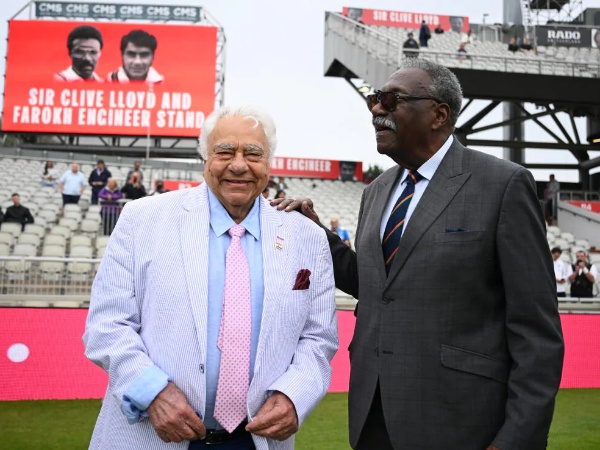
In a landmark moment for Indian cricket, legendary wicketkeeper-batsman Farokh Engineer has been honoured in a truly special way, with Lancashire Cricket Club naming a stand after him at the iconic Old Trafford stadium in Manchester. This tribute marks a historic occasion, as Engineer becomes one of the few Indian cricketers to receive such recognition outside of India. The former cricketer, who played a pivotal role for Lancashire during his county stint, was present at the stadium as one of the distinguished invitees for the fourth Test between India and England.
Sharing the special moment with him was his former Lancashire teammate and West Indies' legendary captain Clive Lloyd, a two-time World Cup winner. Engineer's contribution to Lancashire cricket, particularly between 1968 and 1976, has left a lasting legacy, and this gesture from the club acknowledges his enduring impact. It stands as a proud moment for Indian cricket on the global stage. Beyond his contributions to the Indian national side, Engineer had a prolific First-Class career as well. He played for Mumbai and later Lancashire, featuring in 335 First-Class matches. He amassed a remarkable 13,436 runs, including 13 centuries and 69 fifties, making him one of the most respected cricketers of his generation.
Farokh Engineer, a former Indian cricketer and renowned wicketkeeper-batsman, was born on February 25, 1938, in Mumbai, Maharashtra. Known for his sharp glove-work and athleticism behind the stumps, Engineer earned a reputation as one of India’s finest wicketkeepers. His agility, combined with an attacking batting style, made him a vital asset to the Indian team during the 1960s and early 1970s.
Though primarily known for his wicketkeeping, Engineer was also a dependable Test batter who often stepped up in challenging situations. A stylish right-hander, he played several gritty innings that helped stabilize India’s position in difficult matches. His fearless stroke play and determination at the crease made him a crowd favourite. In his international career, Engineer represented India in 46 Test matches, scoring 2,611 runs at an average of 31.08. His Test record includes 16 half-centuries and 2 centuries—an impressive feat for a wicketkeeper of his era.
Farokh Engineer was one of the most respected overseas players in the English domestic circuit, having served Lancashire with distinction for nearly a decade. Representing the county from 1968 to 1976, he played a crucial role in their success, scoring 5,942 runs, taking 429 catches, and completing 35 stumpings. His consistency and impact made him a fan favourite and a vital figure in the County Championship.
In recognition of his immense contribution, Lancashire Cricket Club honoured him by naming a stand after him at the iconic Old Trafford stadium. The stand was officially unveiled on Day 1 of the India vs England 4th Test match. Engineer, regarded as one of India’s finest wicketkeepers, remains an inspiration to many modern-day Indian keeper-batters.