
T20 World Cup 2026: India's bowling failed against South Africa?
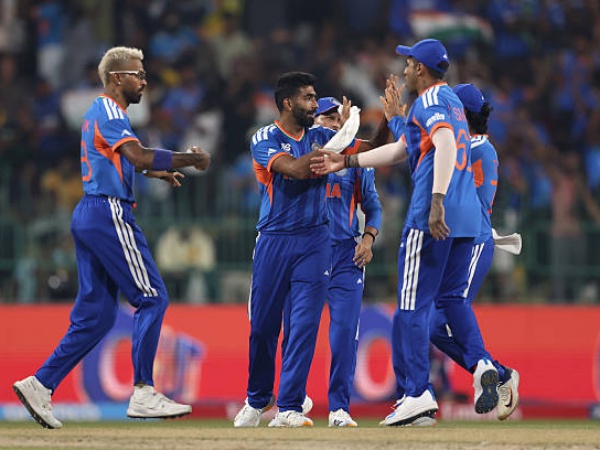
India’s campaign at the T20 World Cup 2026 took a serious hit after a crushing 76-run defeat to South Africa in the Super 8 stage. The loss not only dented their winning momentum but also sparked strong reactions from the cricketing fraternity. Among the critics was former Pakistan pacer Shoaib Akhtar, who questioned India’s bowling combinations and selection decisions, suggesting that the team’s strategy lacked balance in a high-pressure game. India had entered the Super 8 encounter in Ahmedabad brimming with confidence after progressing through the group stage unbeaten. Their performances earlier in the tournament had showcased both batting depth and disciplined bowling.
T20 World Cup 2026: Indian bowlers were the reason for the loss against South Africa?
However, South Africa capitalised on key moments to expose gaps in India’s bowling attack. Batting first, the Proteas posted a competitive 187/7, with impactful contributions from David Miller and Dewald Brevis, who accelerated during the death overs. Chasing 188, India’s batting unit faltered under pressure. Wickets fell at regular intervals, preventing any meaningful partnerships from developing. The innings ended at 111 in 18.5 overs, marking India’s biggest defeat in T20 World Cup history and raising fresh questions about their approach moving forward.
While India’s batting collapse grabbed headlines, it was the team’s bowling strategy that attracted the sharpest criticism. Apart from Jasprit Bumrah and Arshdeep Singh, who together picked up five wickets and maintained control during crucial phases, the rest of the bowling unit struggled to contain South Africa’s aggressive finish. The lack of consistency in the death overs allowed the opposition to push the total well beyond a par score.
Speaking on Tapmad, former Pakistan pacer Shoaib Akhtar openly questioned India’s tactical approach, particularly their reliance on pace-bowling all-rounders in the closing overs. He pointed specifically to Hardik Pandya and Shivam Dube, suggesting that the decision to entrust them with key overs at the death may have backfired. Akhtar implied that India’s bowling combinations lacked clarity and that better planning might have prevented the late surge from the Proteas.
“Hardik and Shivam Dube were bowling at around 120 kmph. It’s not as if they are Malcolm Marshall — someone who would intimidate a batting line-up of South Africa’s calibre. If you deploy them in the death overs, such a counterattack from the Proteas is inevitable,” stated former Pakistan speedster Shoaib Akhtar.
Notably, Hardik Pandya endured a tough outing with the ball, conceding 45 runs in his spell, including an expensive final over that went for 20 runs and shifted the momentum firmly in South Africa’s favour. Shivam Dube also proved costly, leaking runs at a crucial stage. Together, the two all-rounders were unable to contain the late onslaught, allowing the Proteas to post a daunting total.
Former Pakistan pacer Shoaib Akhtar also expressed concern over Varun Chakravarthy’s noticeable drop in pace. Usually operating at around 97–98 kmph, the mystery spinner appeared slower and less threatening in this encounter. He was taken apart by Dewald Brevis, who even smashed a remarkable no-look six. Akhtar suggested that Varun lacked his trademark sharpness and control, which made him far less effective than usual.
“India’s bowling has been exposed. If you look at Varun, whose strength is bowling at 97–98 kmph, he was clocking 94. And when he came into the attack, he was struck for a no-look six by Dewald Brevis,” Akhtar added.
Former Pakistan pacer Shoaib Akhtar believes that Kuldeep Yadav could be the missing piece in India’s bowling attack and has urged the team management to reconsider their combination. According to Akhtar, Kuldeep’s experience and ability to trouble batters with his variations could add much-needed balance to the side, especially in high-pressure matches. He suggested that the think tank should look beyond recent setbacks and bring the seasoned left-arm wrist spinner back into the India playing XI. Akhtar feels Kuldeep’s control in the middle overs and knack for breaking partnerships could strengthen India’s overall bowling structure. With the tournament at a crucial stage, he emphasized that bold and smart selection decisions may be necessary to revive momentum and improve the team’s chances going forward.
"The missing link here is Kuldeep Yadav. He is someone who can deceive batters in the air and pick up wickets when needed. He is a proven match-winner," Akhtar concluded.