
Sanjay Manjrekar comes up with a huge opinion ahead of the T20 World Cup 2026
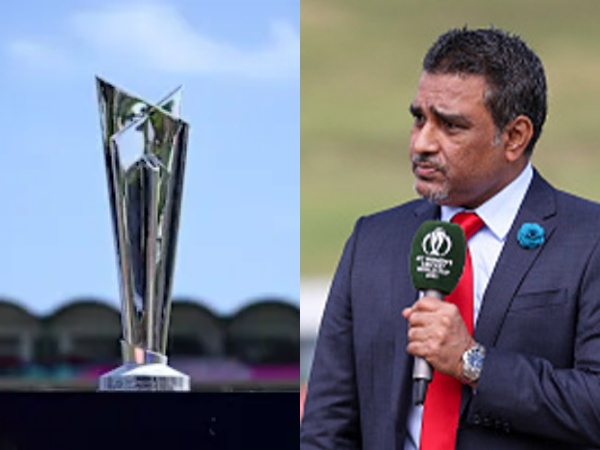
Ahead of the ICC T20 World Cup 2026, former India cricketer and current commentator Sanjay Manjrekar has shared his views on how major international cricket tournaments should be defined. Manjrekar believes that the prestige associated with the term “Cricket World Cup” should be reserved exclusively for the 50-over format of the game. He argued that the ODI World Cup, which is held once every four years, carries a level of history, legacy, and global significance that sets it apart from other tournaments. According to Manjrekar, the T20 international tournament does not fit the traditional definition of a World Cup because it is conducted every two years, making it far more frequent. He feels that this regularity dilutes the exclusivity and grandeur typically associated with a World Cup event.
T20 World Cup 2026: Sanjay Manjrekar's latest post opens a new debate
Instead, Manjrekar suggested that the T20 competition should be officially referred to as the “World T20,” a name that better reflects the format while maintaining clarity and distinction between formats. The former batter’s comments have sparked debate among fans and experts, particularly in an era where T20 cricket dominates the global calendar. While many appreciate the entertainment value of the shortest format, Manjrekar’s perspective highlights the importance of preserving the historical weight and unique status of the 50-over World Cup in international cricket.
For me the ‘Cricket World Cup’ will
— Sanjay Manjrekar (@sanjaymanjrekar) January 30, 2026
always be the 50 overs World Cup.
The T20 version held every two years must not be given the same status of a World Cup that comes once in 4 years. I prefer the original name for it - The WorldT20.
Sanjay Manjrekar’s comments arrive at a moment when the future of the ODI format is increasingly under scrutiny. Once regarded as the pinnacle of limited-overs cricket, ODIs are now often seen as the least engaging among the three formats, with Test cricket and T20Is commanding greater attention and frequency in the modern calendar. The rise of fast-paced T20 leagues and the renewed emphasis on marquee Test series have pushed ODIs into an uncomfortable middle ground, raising concerns about their long-term relevance.
There is a growing belief within cricketing circles that the World Cup 2027, scheduled to be held in South Africa, could potentially mark the final ODI World Cup. This view stems from shifting audience preferences, packed schedules, and the commercial dominance of the shortest format. Although the ICC has officially penciled in the 2031 World Cup to be co-hosted by India and Bangladesh, the gap of five years feels significant given how rapidly the sport is evolving. Formats, fan interests, and broadcasting priorities continue to change at a fast pace, making long-term predictions uncertain.
The T20 international tournament was originally known as the “World T20” for its first six editions, held in 2007, 2009, 2010, 2012, 2014, and 2016. The name reflected the format’s shorter, more explosive nature and helped distinguish it from the traditional 50-over World Cup. However, following a five-year gap caused by scheduling disruptions, the tournament was rebranded as the “T20 World Cup” after the 2021 edition, which was staged in the UAE. The change in terminology signaled the ICC’s intent to elevate the stature of the T20 event, placing it closer to the prestige traditionally associated with the ODI World Cup.
Manjrekar’s viewpoint closely mirrors that of Rohit Sharma. The former India captain, despite having lifted the T20 World Cup, has consistently regarded the 50-over World Cup as the ultimate prize in cricket. This perspective perhaps explains why India’s heartbreaking defeat to Australia in the 2023 World Cup final continues to resonate so deeply. Under Rohit’s leadership, India produced a dominant campaign, winning 10 consecutive matches and capturing the imagination of an entire nation. October 2023 felt like a month-long celebration of cricket, with unparalleled energy and optimism. Yet, when India fell at the final hurdle, the disappointment was profound. Rohit himself reportedly avoided speaking about the loss for nearly a month, highlighting just how emotionally significant the ODI World Cup remains.