
IND vs SA: Should India play Test cricket on rank-turner pitches?
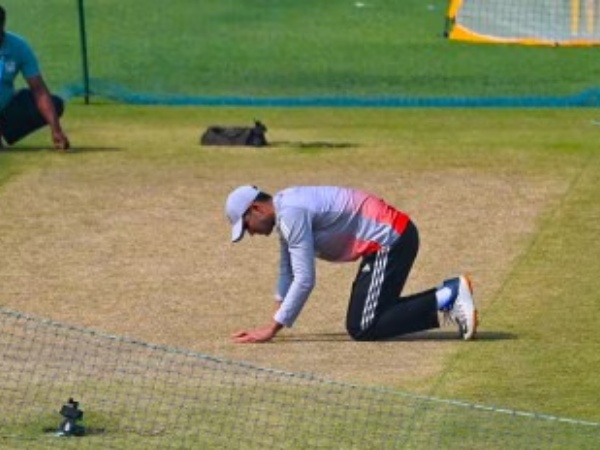
India’s performance in the opening Test against South Africa was disappointing by every measure, particularly their inability to chase a modest target of 124. The collapse drew heavy criticism from former cricketers, many of whom questioned the current generation’s technique and temperament against spin, an area traditionally considered India’s strength. Among the voices was former India off-spinner Ravichandran Ashwin, who openly stated that batters from earlier eras possessed far superior defensive techniques and shot selection when facing quality spin bowling. Ashwin emphasised that success in subcontinental conditions depends largely on how well teams negotiate spin, especially on surfaces that begin to deteriorate from the second day onward.
IND vs SA: Is Indian management making a mistake on demanding rank-turners?
He noted that without confidence and skill against spinners, even small targets can become daunting, as was evident in Kolkata. The veteran spinner also drew parallels to India’s 3-0 whitewash against New Zealand last year, where Mitchell Santner and Ajaz Patel dominated with their accuracy and variations. According to Ashwin, these repeated failures highlight a growing concern: the diminishing ability of modern Indian batters to apply themselves on turning tracks, a weakness that must be urgently addressed if the team hopes to regain its dominance at home.
“I am gonna stick my neck out and say in another game in an era where spin bowling was combated very well. I will take the names Amol Muzumdar and Mithun Manhas, who is the BCCI President, and I won’t take all the names, but Sachin Tendulkar in his prime, the God of Cricket. If these guys had played on the same wicket against spin, this game would have gone to four days," stated former Indian cricketer Ravichandran Ashwin.
"In a total of 16 batters, only three to four players have defended well. If you want to play on turning tracks, then your game against spin has to be good; otherwise, don’t play on such pitches as simple," he added.
Ashwin observed that visiting teams have gradually become more competent at playing spin, in some cases even surpassing India in their preparation and adaptability. He explained that many international sides now dedicate significant time to practising on turning surfaces before touring the subcontinent. Through specialised drills, extensive net sessions against quality spin, and simulated rough pitches, they arrive better equipped to tackle the challenges traditionally associated with Indian conditions. In contrast, Ashwin pointed out a noticeable gap in India’s own approach.
While the team invests heavily in preparing for pace and bounce ahead of overseas tours, often arranging camps with green-top pitches and high-speed bowling machines, the same level of focused preparation is not always applied when it comes to spin for home series. According to him, Indian batters tend to rely on their natural familiarity with slow, turning tracks, assuming the conditions alone will work in their favour. However, as recent results have shown, this assumption is outdated. The modern game demands deliberate, high-quality practice regardless of the venue. Ashwin stressed that unless India prioritises specialised spin training at home with the same seriousness they apply to fast-bowling preparation abroad, they risk losing a long-standing advantage in their own backyard.
“Most Western teams are better than India now because they come to India, they practice it a lot more, but we don’t practice enough of it. But we are superior players of fast bowling in many other venues right now because we consider that as a challenge, but not this. That is the difference,” Ashwin concluded.
India have now suffered their fourth home Test defeat since 2024, an alarming pattern for a side once seen as nearly invincible in familiar conditions. Their vulnerabilities became evident last year during the unexpected 0-3 whitewash by New Zealand, and the recent loss to South Africa suggests that several of those issues still persist. The team’s inconsistency, especially on turning tracks, has raised serious questions about preparation and adaptability.
Even so, India have a chance to bounce back during the IND vs SA 2nd Test. The upcoming second and final Test against South Africa, starting Saturday, November 22, at the Barsapara Cricket Stadium in Guwahati, presents a crucial opportunity to level the series. A strong, disciplined performance will be essential not just to avoid another home series defeat but also to restore confidence in their evolving red-ball unit. The team will be determined to show improvement, correct past mistakes, and regain lost momentum.