
IND vs SA: Mohammed Siraj deserves to be part of India's white-ball squad?
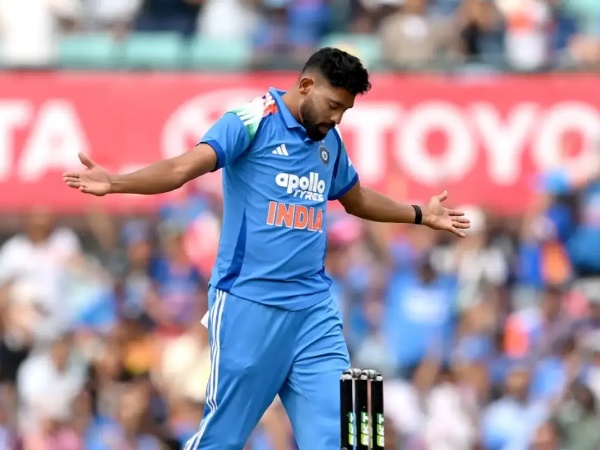
Former Indian cricketer Aakash Chopra has raised concerns over the selectors’ choice to exclude Mohammed Siraj from India’s recent white-ball squads. Chopra questioned why Siraj, despite proving his effectiveness across formats, is gradually being restricted to Test cricket alone. He suggested that the fast bowler appears to be slipping into the category of a one-format specialist without any clear justification from the selectors. According to Chopra, such a move overlooks Siraj’s proven strengths in limited-overs cricket and undermines the balance he can bring to India’s pace attack. While Siraj remains an undisputed pillar of India’s red-ball bowling unit, his opportunities in ODIs and T20Is have reduced significantly in recent months.
IND vs SA: Aakash Chopra feels Mohammed Siraj deserves a place in the India white-ball squad
Chopra recalled that Siraj was part of the ODI series against Australia, where he may not have taken a large haul of wickets but impressed with his consistency and control. His tight lines, disciplined spells, and excellent economy rate demonstrated his ability to contain runs while creating pressure—an invaluable trait in modern white-ball cricket. Chopra argued that these attributes reinforce why Siraj should not be overlooked for shorter formats. Instead, he believes the selectors must recognize the variety and skillset Siraj brings and ensure he remains an integral part of India’s white-ball plans.
"You keep wondering why we don't see Mohammed Siraj in the ODI setup. Not in ODIs or T20Is. They've made him pack his bags and made him only a one-format player. Why are we doing this? I don't know, and I am a little surprised," stated former Indian cricketer Aakash Chopra.
Chopra’s comments echo a growing belief among supporters that India may not be maximizing the potential of one of its most adaptable fast bowlers. Mohammed Siraj’s skill set, his ability to swing the new ball, generate steep bounce, and maintain relentless intensity during the middle overs, once made him indispensable in limited-overs cricket. His extraordinary spell in the Asia Cup 2023 final, where he demolished Sri Lanka with a stunning seven-wicket burst, remains one of the most memorable and dominant ODI performances in recent years. That display alone showcased why Siraj was considered a game-changing asset in white-ball formats.
Yet, despite such achievements, the national selectors have increasingly leaned towards rotating their fast bowlers. Senior pacers like Siraj and Jasprit Bumrah have frequently been rested as part of workload management strategies, allowing emerging quicks like Arshdeep Singh, Harshit Rana, and Prasidh Krishna to gain valuable international exposure. While grooming the next generation is essential, India’s bowling attack has at times struggled in difficult, dew-affected conditions, where experience and control become crucial. Many argue that Siraj’s absence in such scenarios has been felt, and that his blend of aggression, accuracy, and adaptability remains vital for maintaining balance and resilience in India’s limited-overs bowling unit.
Aakash Chopra emphasized that a bowler of Mohammed Siraj’s calibre should not be confined to just one format without transparent communication from the selectors or team management. He stressed that Siraj has repeatedly demonstrated the skill, temperament, and versatility required to succeed in all forms of the game, making it unfair to sideline him from white-ball cricket without a convincing explanation. Chopra warned that such decisions risk demotivating a proven performer who has consistently delivered in high-pressure situations.
With India heading into an increasingly demanding cricket calendar, featuring multiple bilateral series and major ICC tournaments, Chopra’s remarks are likely to reopen discussions about how the management prioritizes and rotates its fast-bowling unit. He suggested that maintaining clarity, consistency, and fairness in selection becomes even more crucial during such periods. For many observers, Siraj’s record and recent performances make a strong case for giving him a more stable, prominent role across formats rather than limiting his contributions to red-ball cricket alone.