
Dilution of captaincy in Indian cricket is glaring
Captaincy in cricket has entailed leadership on and off the field. India is blessed to have seen a galaxy of skippers who led with flair and fluency from times immemorial. Old timers who do not a Google search will recall how Tiger Pataudi – Mansur Ali Khan Pataudi -- led brilliantly despite an eye handicap. To have been elevated to the leadership role in his 20s and carried on for almost 14 years was a long time.
Captains who came after Tiger Pataudi were also noted for their skills. Notably, they were strong personalities as well, men who led by example, that is setting personal examples with the bat or ball. Of course, once Kapil Dev won the 1983 World Cup in England, the narrative changed. Kapil was a once in a lifetime captain, born with skills on the field as a batsman, longevity as a fast bowler and an excellent fielder.
The Haryanvi, known as Hurricane, had few problems with fitness and how long he served Indian cricket was defining. If there has been a classic case of leading by example, it is Kapil Dev. He set high standards and at the same time was aware not every other bloke in the Playing 11 was going to match his levels of passion and intensity.
Many captains followed, with Anil Kumble also being a classical leader who led from the front, notably in Test cricket. For those who say he hardly turned the ball, that is wrong. Kumble did not take 619 Test wickets by fluke. He had worked for it to flummox batsmen, now known as batters. Those were the days when the captain was in command, like the pilot in the cockpit. Absolute control barring conversation with his first officer and air traffic control (ATC).
A cricket coach, or manager at that time was more like an assistant, who did not have so much power. That is how Indian cricket captains were allowed to function. If one cuts to the last three notable captains who have served Indian cricket, MS Dhoni, Virat Kohli and Rohit Sharma, they have been fierce leaders who set an example by performing, personally, and taking the team along. Dhoni was described by some as a defensive Test captain but nobody can deny, he is the one who won India two World Cups, in the T20 format and ODI, in 2007 and 2011.
When Dhoni decided, rather abruptly, he was giving up captaincy in Australia, almost a decade back, there was no second thought. The BCCI also agreed the time was ripe to throw Kohli into the deep end of the pool. The boy-turned-man from Delhi went on to lead by example, defining high standards in fitness and instilling in the players belief how to play hard cricket. The kind of rapport he shared with coach Ravi Shastri was also defining.
When Kohli had to move on, the circumstances may have been forced, but he never made noise. Remarkably, Kohli played under Rohit Sharma with the same willingness and passion. The transition was smooth on both fronts, captaincy as well as a new coach coming on board – Rahul Dravid. What was important, the role of captaincy was never diluted or diminished.
And yet, when the BCCI decided that Rohit Sharma had to go, for whatever reasons, it became clear, a duo had managed to prevail over the BCCI. To say that the BCCI has weak Presidents is stating the obvious. Big decisions were being made from not the BCCI President’s office and someone like Roger Binny defined what it means to be a rubber stamp. It was under the same Binny, a decision was taken to make Gautam Gambhir coach in July 2024. What Gambhir has done is well-known. Like the proverbial ‘bull in a China shop’ he took major decisions with Ajit Agarkar, chief selector, who has also assumed massive power.
The tectonic shift meant they wanted a captain who would be seen as one for the future. If that vision was well-planned, to elevate Shubman Gill as leader for the England tour was welcomed. Gill the batter has been classy. He did set an example in England as well, scoring heavy runs but the man who wanted attention is coach Gambhir. And that is reflected from his utterances at the latest press conference after the loss to South Africa in Guwahati.
Perhaps, Gill had not bargained for so much load and negativity, where his own coach wanted to impose himself. If captains had a say in selections in the past, that was justified. Today the scenario is different. It is the coach who is throwing his weight around. A captain has no choice but go ahead with the 11 forced on him. Now that Gill is injured, the captaincy roles in Tests and ODIs are being manipulated even more.
So, it was easy for Gambhir to throw Rishabh Pant under the bus after the 2-0 defeat to South Africa. A coach like Gambhir must take responsibility for good results and bad results. He may have talked of his achievements as coach for India in white ball cricket. Gambhir also needs to know if the failure against South Africa was colossal, he mist take the blame as well. To rubbish Pant was not needed, that is like passing the buck.
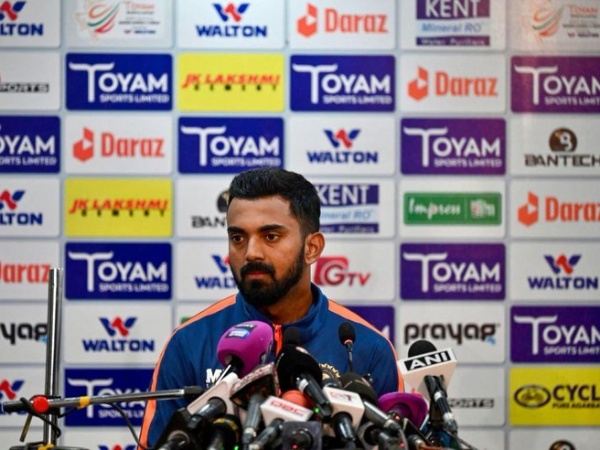
For his part, Pant has put out an apology. It is like a closure to the series, as he will be playing in the ODI series, if selected in the 11, as a player, against SA. Three captains for three formats, and KL Rahul to lead in ODIs, this is interesting. If Gill was captain in two formats, what stopped the BCCI from ensuring Pant led in the ODIs as well? There are wheels within wheels where the Gambhir/Agarkar duo cannot be questioned.
There is one man who shoots arrows from his mouth (Gambhir) and Agarkar has also ruffled feathers. As for his passport, he has travelled all over with the Indian team. Such travel is a tourist’s dream. Has Agarkar done a honest job in selection is already being questioned. Only now is he witnessing some domestic cricket. The real talent to be picked is from domestic cricket. People who have been ignored for selection include Mohd Shami and Sarfaraz Khan. Agarkar needs to answer some day or the other. His job is cushy for sure, but when the bubble bursts is a matter of time.
Indian cricket is unforgiving.