
Asia Cup 2025: Why didn't Pakistan boycott their match against UAE?
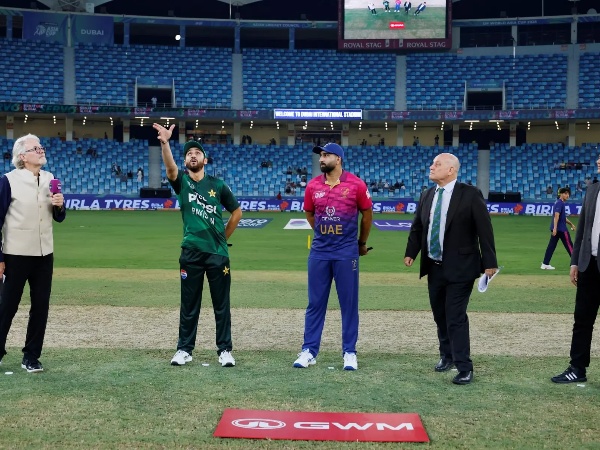
When Pakistan finally stepped onto the field against the UAE in Dubai on Wednesday, the Asia Cup match was overshadowed by events far removed from the usual cricketing concerns of form or strategy. The game’s start was delayed by an hour, setting an unusual tone before a single ball was bowled. Behind the scenes, frantic communications between officials in Lahore and Dubai unfolded, adding to the mounting tension surrounding the match. The situation escalated quickly as the possibility of a boycott by the Pakistan team loomed large, creating a media frenzy that grabbed headlines across the cricketing world. What should have been routine pre-match preparations turned into a chaotic scenario, with stakeholders scrambling to manage the fallout.
What is the main reason as to why didn't Pakistan boycott their Asia Cup 2025 clash against UAE?
The delay and uncertainty kept fans and officials alike on edge, highlighting how off-field controversies can deeply affect the spirit and flow of a tournament. This drama cast a long shadow over the proceedings in Dubai, reminding everyone that the Asia Cup 2025 is about much more than just cricket. The tension between the teams and their governing bodies has taken center stage, making this clash as much a battle of wills and principles as it is of cricketing skill.
The catalyst for the recent turmoil was the now-infamous handshake controversy during Pakistan’s earlier defeat against India. What began as a simple on-field protocol issue quickly escalated, with the Pakistan Cricket Board (PCB) blowing the matter out of proportion and turning it into a full-scale diplomatic incident. The situation evolved into a public confrontation between the PCB and the International Cricket Council (ICC), drawing intense media scrutiny and increasing tensions between cricketing authorities.
Ironically, in their effort to defend national pride and uphold principles, the PCB ended up putting its own players under unnecessary stress at a crucial moment in the tournament. This internal chaos, unfortunately, is not a new phenomenon in Pakistan cricket. Over the years, many of the country’s cricketing legends—such as Imran Khan, Wasim Akram, Inzamam-ul-Haq, Misbah-ul-Haq, Sarfraz Ahmed, and Babar Azam—have all faced similar challenges stemming from board decisions and management issues. These disruptions have often distracted players and affected their performance on the field.
This recurring pattern highlights a larger problem within the administration, where off-field controversies frequently overshadow the game itself, complicating the players’ ability to focus on cricket and perform to their potential on the international stage. Pakistan’s complaint centered on the toss during their match against India, where Indian captain Suryakumar Yadav deliberately refused to shake hands with Pakistan’s Salman Ali Agha. This act was echoed by other Indian players after the match, adding fuel to an already tense atmosphere. Suryakumar defended his stance by stating that “a few things in life are bigger than sporting spirit.” He further dedicated India’s victory to the victims of the April terror attack in Pahalgam and to the Indian armed forces, who had conducted retaliatory strikes on terror camps in Pakistan and Pakistan-occupied Kashmir.
The handshake controversy erupted during their first encounter since these tragic events and the subsequent cross-border tensions, making the gesture feel like a deliberate insult to Pakistan. Given the charged backdrop of an already intense rivalry, the Pakistan Cricket Board viewed the incident as a serious affront. In response, the PCB accused match referee Andy Pycroft of mishandling the situation and demanded his removal from the Asia Cup. They even threatened to withdraw from the tournament. The International Cricket Council stood firm and refused the request. After what the PCB described as an apology from Pycroft for a “miscommunication,” Pakistan was instructed to continue playing. Board chairman Mohsin Naqvi, alongside former chairmen Ramiz Raja and Najam Sethi, held a joint press conference in Lahore just an hour before the scheduled match start in Dubai.
For Pakistan, withdrawing from the Asia Cup was never a realistic option. Beyond national pride, the financial stakes were enormous. Five Test-playing nations—India, Pakistan, Sri Lanka, Bangladesh, and Afghanistan—share 75% of the Asian Cricket Council’s revenue. From this tournament alone, Pakistan was set to earn between USD 12–16 million (Rs 105–141 crore), according to PTI.
Walking away would have meant forfeiting this significant income, delivering a severe financial blow to a board that already struggles to match the financial power of the BCCI. While the gesture of threatening withdrawal may have expressed Pakistan’s frustration, the harsh economic realities ultimately left the PCB with no choice but to stay in the tournament and navigate the controversy.